Solana Tokenized Equities Hit $565M Daily Record on IPO Catalyst

What You Need to Know
- Tokenized equities on decentralized exchanges reached $565 million daily volume on June 24, with Solana capturing 97.8%.
- SpaceX IPO and Micron token launch drove surge in tokenized equity trading around earnings and IPO catalysts.
- Tokenized equities offer 24/7 trading access that traditional stock markets cannot, filling gaps between market close and open.
- Total tokenized equity market stands at $1.49 billion, with top 10 assets representing approximately 60% of volume.
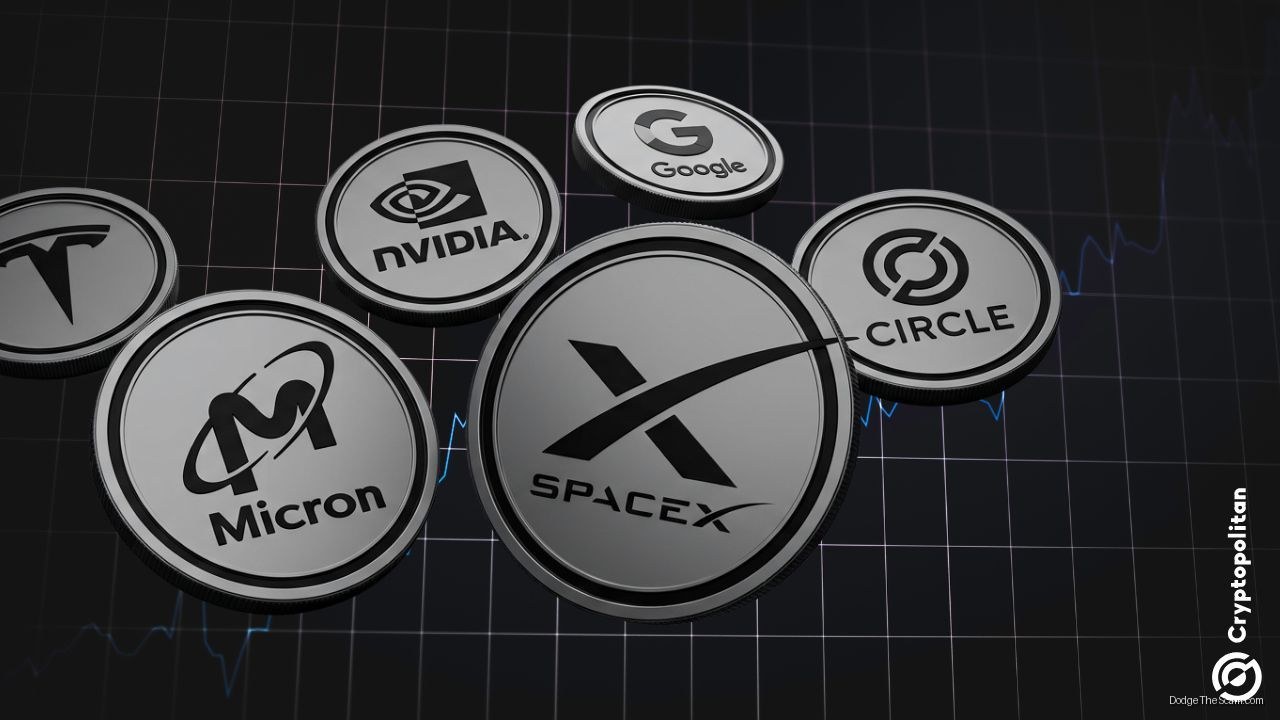
Tokenized equities on decentralized exchanges hit a single-day record of $565 million on June 24, according to Blockworks data, with Solana alone absorbing $553.3 million of that total. Two catalysts drove it: the SpaceX IPO, which began lifting tokenized equity volumes around June 12, and a token tracking Micron that went live just ahead of the chipmaker’s earnings report that same day.
The 97.8% chain concentration is not an accident of timing. The largest tokenized equity issuers built on Solana first, liquidity pooled there, and the fee and settlement speed advantages compound on event-driven days when traders want exposure to a name around an earnings print or an IPO without waiting for market hours. That last point is the actual product thesis: tokenized equities offer round-the-clock access that traditional stock markets cannot. The gap between TradFi close and open is real, and the volume proves traders will use an onchain venue to fill it when a known catalyst is on the calendar. What the data cannot yet answer is whether that demand exists between catalysts, which is a different question entirely. For context, SPCX perpetual futures on Hyperliquid surpassed Solana in daily volumes four days after SpaceX’s IPO, a reminder that this market is still fragmenting across venues rather than consolidating.
The total tokenized equity market sits at $1.49 billion, per Delphi Digital, with the top 10 names accounting for roughly 60% of it.
That concentration means a single new listing can move the aggregate volume numbers in ways that look like sector growth but are really just one asset printing. It also means the market is still thin enough that any regulatory friction applied to one major issuer would register immediately across the whole space. The sector’s regulatory trajectory in the United States remains unsettled, and products that blur the line between securities and onchain tokens are exactly the kind of thing that tends to attract attention once volumes become visible enough to appear in headlines. June 24’s record does that.
The honest test for the second half of 2026 is a quiet week with no IPO and no marquee earnings print. If volume holds without a SpaceX or a Micron on the calendar, the case for structural demand gets real. If it reverts, the product is an event-driven instrument with a good story attached.





0 Comments