Tether Freezes $131M in USDT Linked to Iran’s Central Bank

What You Need to Know
- US Treasury and Tether froze $131 million in USDT linked to Iran’s central bank across four Tron wallets.
- Blockchain investigator Specter identified the addresses before Treasury Secretary Scott Bessent publicly confirmed the connection.
- Tether froze addresses before government announcement, revealing how OFAC and private stablecoin issuers coordinate freezes.
- This is the second nine-figure seizure of Iranian crypto in 2026, following a $344 million freeze in April.
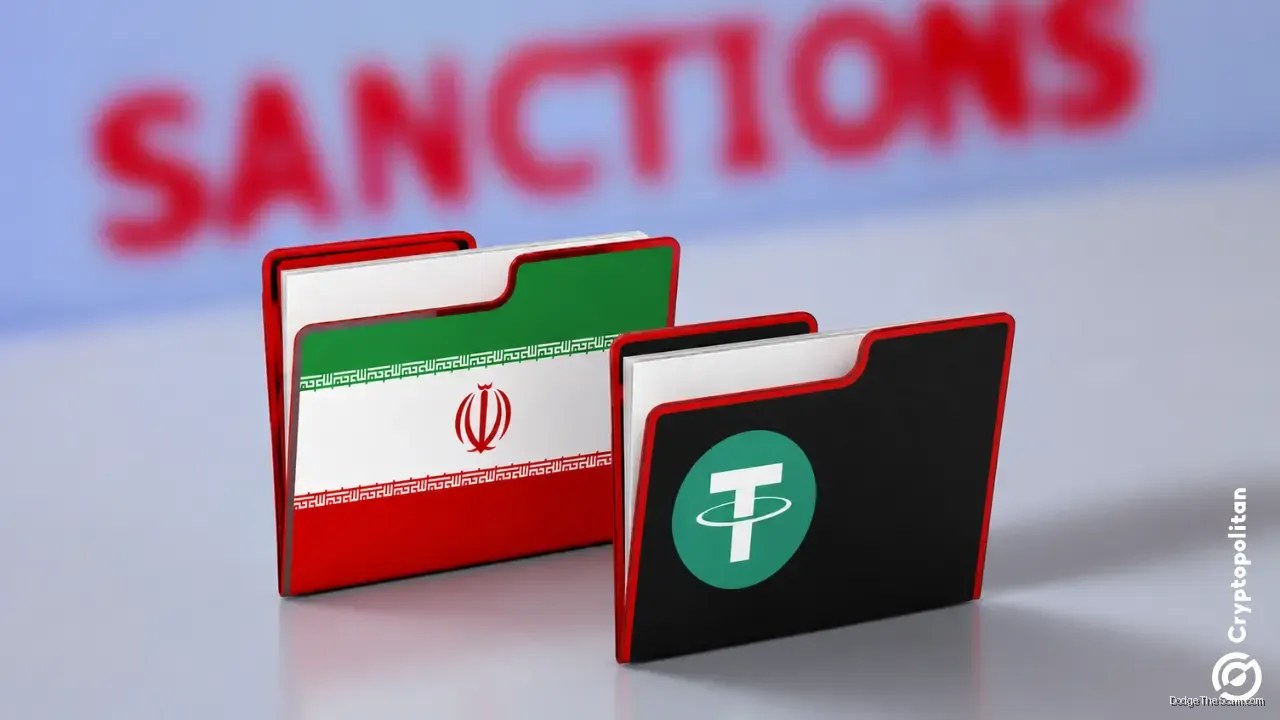
The US Treasury and Tether froze roughly $131 million in USDT held across four Tron wallets linked to Iran’s central bank, with blockchain investigator Specter identifying the addresses before Treasury Secretary Scott Bessent publicly confirmed the connection. The freeze landed as the US-Iran truce collapsed: Washington reinstated port blockades, US Central Command launched new strikes, and Iran’s military claimed drone attacks on US troops at Al Azraq Air Base in Jordan. Stablecoin infrastructure is now visibly operating as a financial weapon alongside the kinetic one.
The on-chain footprint came first. Specter traced the four wallets and found most funds had flowed through DTC Pay, a payment service provider, and Bitso, a cryptocurrency exchange. Tether moved to freeze the addresses before Bessent’s public statement, which tells you something about how the coordination between OFAC and private issuers actually works: the freeze happens first, the announcement follows.
A Second Nine-Figure Seizure in 2026
This is the second time this year that a single Iran-linked action has crossed nine figures. In April, Tether supported the US government in freezing $344 million in USDT from two addresses, with a US official telling CNN the funds had material links to the Iranian regime through oil trading intermediaries and Central Bank of Iran wallets. That action was part of Operation Economic Fury, a campaign launched in March 2025 to cut off Iranian oil revenue. By May, Bessent was claiming roughly $1 billion in Iranian crypto seized under that effort. The $131 million this week is an addendum to an already substantial campaign, not an isolated event.
The tool making all of this possible is the T3 Financial Crime Unit, a joint operation between Tether, Tron, and blockchain analytics firm TRM Labs. TRM handles transaction tracing, Tron provides network visibility on its public ledger, and Tether executes the actual freezes. TRM has noted that a stablecoin issuer can freeze an address, burn the tokens, and reissue clean funds on-chain, a capability that has no direct equivalent in traditional banking. Since September 2024, T3 claims to have frozen over $450 million in suspicious USDT. That number now understates the total given this week’s action.
Why Tron, and Why It Keeps Appearing
Tron’s repeated appearance in these cases is not incidental. The network carries a disproportionate share of global USDT volume, particularly in markets where dollar access is restricted or where users prioritize low fees over decentralization. Sanctioned actors gravitate toward the same properties that make a network attractive to everyone else: cheap, fast, liquid. The irony is that Tron’s public ledger, which is visible to anyone with the right analytics tools, makes it easier to trace than a more privacy-preserving network would be.
This dynamic has a parallel in how stablecoin pilots in regulated markets are being structured: technical responsibilities split across multiple parties, with settlement and compliance layers deliberately separated. The T3 model does something similar, distributing the tracing, visibility, and enforcement functions across TRM, Tron, and Tether respectively. The difference is that the T3 arrangement operates reactively, under government coordination, rather than by design in a permissioned environment.
Transparency Infrastructure Is Catching Up
Visa and Allium Labs have now launched a public dashboard tracking fiat-backed stablecoin flows across blockchains, including sender and receiver addresses. That kind of public-facing surveillance layer, arriving alongside the regulatory momentum building around stablecoin legislation in the US, suggests the compliance architecture is becoming more formalized rather than more optional.
For Tether specifically, the cooperation with OFAC is a calculated posture. The company has faced years of questions about its reserve transparency and its role in facilitating flows that regulators find uncomfortable. Demonstrating responsiveness to US government requests at this scale, twice in one year, is a form of regulatory relationship-building that no press release could substitute for. Whether that goodwill translates into softer treatment under whatever stablecoin framework eventually passes is the more consequential question.





0 Comments