OpenAI IPO Filing Signals Harder Private Funding, Threatens Crypto Capital Flows

What You Need to Know
- OpenAI filed confidential S-1 with SEC, first step toward public listing with no IPO date set.
- OpenAI raising capital publicly despite $157 billion valuation because frontier AI development costs exceed private funding capacity.
- Musk lawsuit settlement removes material legal risk disclosure that would complicate S-1 filing process.
- OpenAI IPO could redirect institutional capital away from Bitcoin ETFs and crypto venture investments.
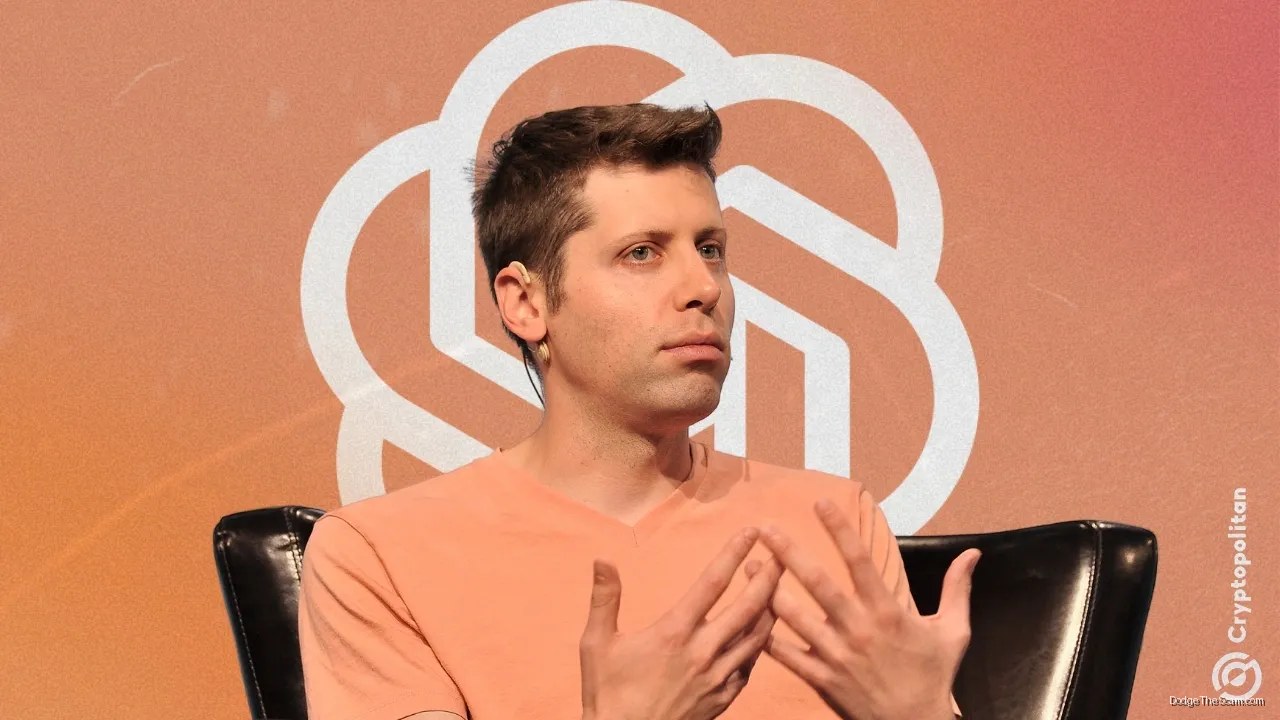
OpenAI has filed a confidential S-1 with the SEC, the formal first step toward a public listing, while making clear that no IPO date exists yet. The filing is procedural, not a launch announcement, but it does close off the possibility of pretending the question isn’t on the table.
The more interesting context is structural. OpenAI is not filing because it needs money in the conventional sense; it has raised tens of billions in private capital, most recently at a $157 billion valuation. It is filing because the cost curve for frontier AI is steep enough that even that capital base has a ceiling, and because private funding rounds create governance complications that public markets, paradoxically, can simplify. Anthropic is moving in the same direction. When the two dominant players in a sector both signal a turn toward public markets within the same window, it usually means the private funding environment has quietly gotten harder, not that the sector has gotten easier.
The Musk lawsuit settlement matters here more than it’s being credited: a pending legal challenge from a co-founder alleging mission drift would have been a material risk disclosure nightmare in any S-1.
For crypto markets, the OpenAI IPO trajectory is relevant in one specific way. Institutional capital has a finite allocation to high-risk, high-growth technology exposure. If OpenAI prices at a valuation north of $200 billion and generates the kind of retail and institutional demand that recent AI-adjacent listings have, it pulls oxygen from the same pools that have been flowing into Bitcoin ETFs and crypto venture. The correlation between crypto and Nasdaq-listed growth assets has been tight since 2020; a major liquidity event in public AI equities does not exist in a separate universe from crypto risk appetite. Fund managers rebalancing into a generational IPO will rebalance from somewhere.
The September timeline reported by the Wall Street Journal in May would place any offering during a period when the Federal Reserve’s rate path is still unresolved and when spot Bitcoin ETF flows have been inconsistent. Whether OpenAI’s bankers at Goldman and Morgan Stanley hold to that window or push into 2026 will depend partly on market conditions that no one controls. That decision, when it becomes public, will be worth watching not for what it says about OpenAI, but for what it implies about where institutional risk appetite actually sits at that moment.





0 Comments