DeepSeek Raises $7B While Locked Out of Nvidia Chips

What You Need to Know
- DeepSeek raised over $7 billion in first external funding round, valuing company at $50 billion.
- Founder Liang Wenfeng contributed roughly 40 percent of total raise; outside investors received no voting rights.
- Chinese state-backed AI fund received voting rights and no lock-up, reflecting Beijing’s push for self-sufficient AI stack.
- DeepSeek’s low-cost open-source models lost competitive edge as AI agents requiring more compute became new benchmark.
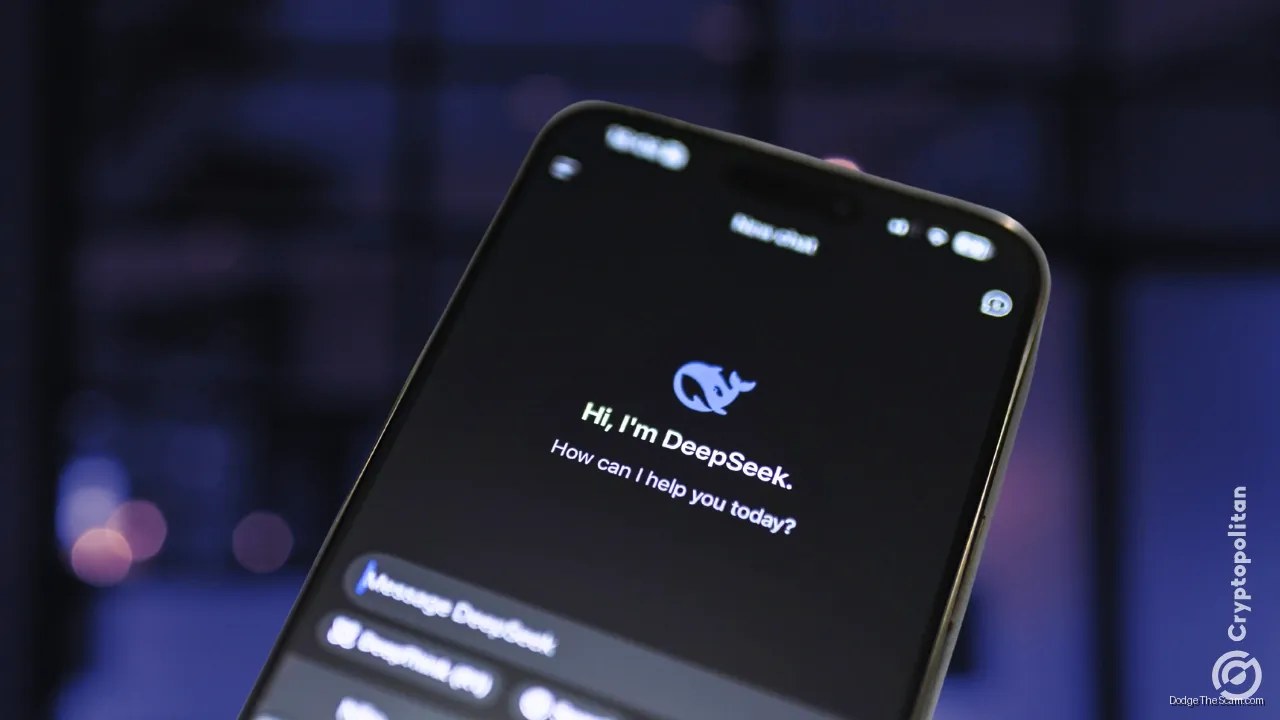
DeepSeek has closed its first-ever external funding round at more than $7 billion, valuing the Chinese AI startup at over $50 billion and confirming that frontier AI capital is no longer a Silicon Valley monopoly. The deal’s structure is as telling as its size: outside investors received no voting rights and face a five-year lock-up, while founder Liang Wenfeng personally contributed roughly 40 percent of the total raise.
The investor list reads like a map of China’s strategic priorities. Tencent, CATL, JD.com, NetEase, and IDG Capital all participated, with China’s National Artificial Intelligence Industry Investment Fund as the sole investor granted both voting rights and no lock-up restriction. That carve-out for the state-backed fund is not incidental. The broader funding architecture reflects Beijing’s push toward a self-sufficient AI stack, covering models, chips, and energy infrastructure, precisely because Western export controls have cut off DeepSeek’s access to advanced Nvidia processors. CATL’s involvement is the sharpest illustration of this: a battery manufacturer that recently moved into AI data center power systems is now a direct stakeholder in one of China’s most prominent AI labs. DeepSeek’s pivot to external capital also signals something about its technology position. According to reports, the low-cost, open-source models that made DeepSeek famous have lost their competitive edge as AI agents requiring far more compute become the new benchmark.
Three private AI firms have now raised a combined $190 billion in 2026 alone, with OpenAI accounting for $122 billion and Anthropic for $65 billion. DeepSeek’s $7 billion looks modest against that, but its $50 billion valuation was achieved while surrendering almost no governance.
That repricing is what both Western firms are now inviting. OpenAI is not expected to be profitable until 2030 and the gap between private valuations and public market expectations remains untested. DeepSeek’s deal, structured to minimize outside influence while still clearing a $50 billion mark, hands public market investors a reference point that is structurally unflattering to governance-heavy IPO candidates. Tencent’s participation is also worth reading carefully: its own AI effort, Hunyuan, has struggled against ByteDance’s Doubao, and backing DeepSeek is a hedge that keeps Tencent competitive with Alibaba’s support for the Qwen model without requiring it to win independently.
The Information reports that the limited partnership structure routes all decision-making through Liang Wenfeng, preserving the operational independence that allowed DeepSeek to run open-weight research without commercial pressure since its founding in 2023. Whether that independence survives at the scale this capital is meant to fund is the question the next eighteen months will answer.



0 Comments