CLARITY Act Misses July 4 Deadline Over Ethics Standoff on Official Crypto Holdings

What You Need to Know
- White House targeted July 4 deadline for CLARITY Act signing, now unlikely before recess.
- Democrats demand ethics restrictions preventing senior officials from profiting on crypto assets they regulate.
- CLARITY Act would grant XRP, ADA, HBAR, and XLM statutory recognition as digital commodities.
- Senate Banking Committee advanced bill 15-9 in May; 60 votes needed to clear filibuster.
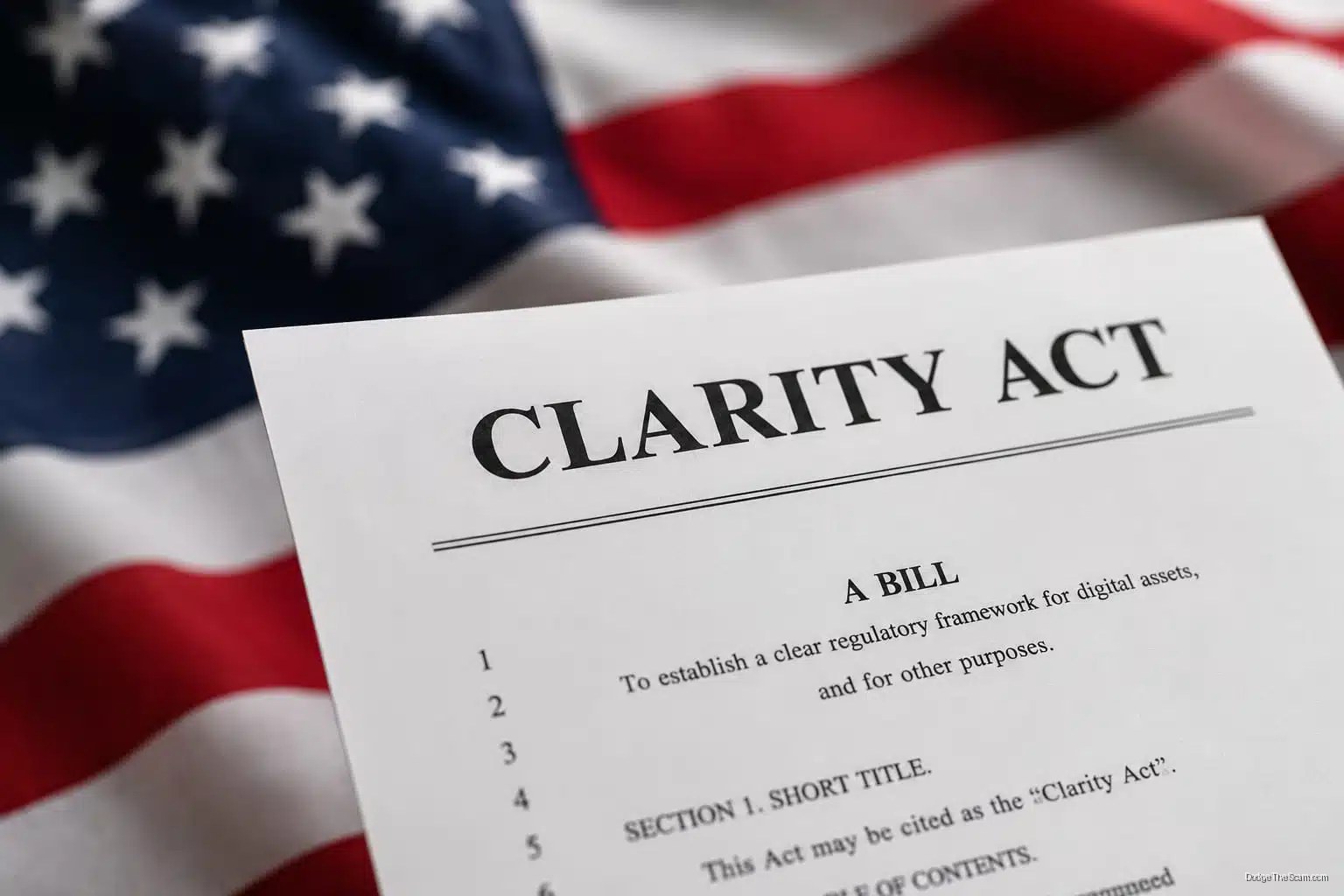
The White House wanted to sign the CLARITY Act into law by July 4, tying it to the country’s 250th anniversary. That deadline is now, by most accounts, fiction.
Crypto journalist Eleanor Terrett laid out the sequence plainly: before any vote, Congress needs an ethics solution both parties can accept, reconciliation between House and Senate bill versions, resolution of agriculture committee language, and 60 votes to clear a Senate filibuster, all before lawmakers leave for the holiday recess. The ethics provision is the sharpest obstacle. Democrats want explicit restrictions preventing senior officials, including the president, from profiting on crypto assets they are simultaneously regulating. That demand carries obvious political weight given the current administration’s documented crypto holdings, and it is not the kind of language that gets quietly papered over in a two-week sprint. The Senate Banking Committee did advance its version 15-9 on May 14, which was enough to send XRP briefly to $1.52 on bets that regulatory clarity was finally close, though it has since settled back to $1.22.
The July 4 target was always more symbolic than structural. Legislation this complex rarely bends to a calendar date chosen for optics.
What Slippage Actually Costs
The stakes of delay are not abstract. Under the CLARITY Act, XRP, ADA, HBAR, and XLM would receive statutory recognition as digital commodities under CFTC jurisdiction, replacing the patchwork of court decisions and regulatory interpretations that currently govern their status. A coalition of more than 60 firms, including Coinbase, Kraken, a16z Crypto, Uniswap, and Solana Labs, has already written to Senate Majority Leader John Thune urging that developer protections survive the negotiation process intact. Senator Cynthia Lummis has been more direct: miss this legislative window and the bill likely does not return until 2030, a timeline that would leave the entire sector in regulatory limbo through at least one more full market cycle.
Galaxy Digital currently puts 2026 passage odds at 60 percent. Polymarket has them at 50 percent, down from 70 percent in mid-May. Both figures reflect the same underlying reality: the bill is moving, but the path requires bipartisan cooperation on ethics language that neither side has fully agreed to yet. Given that the stablecoin bill is simultaneously navigating its own House reconciliation process, there is a credible scenario where both major pieces of crypto legislation stall in the same session, leaving industry participants with neither framework in place heading into 2027.
The CLARITY Act has more institutional backing than any crypto bill before it. That does not mean it passes on schedule. It means the lobbying pressure to eventually pass something is high enough that a miss now is a delay, not a death, which is cold comfort for projects whose regulatory status remains a legal opinion rather than a statute.





0 Comments