S&P 500 Blocks SpaceX From Index Until Four Profitable Quarters
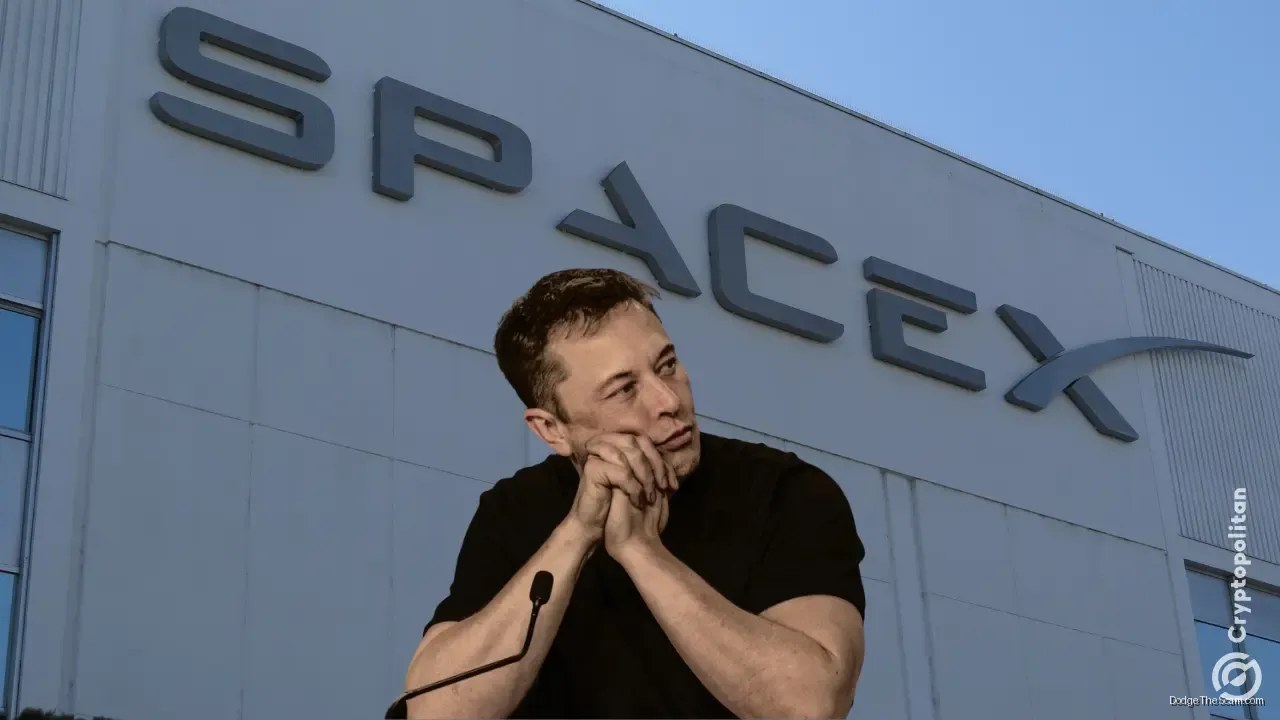
What You Need to Know
- S&P 500 maintained all IPO eligibility rules including 12-month seasoning and GAAP profitability requirement.
- SpaceX cannot join S&P 500 until posting four consecutive profitable quarters under standard accounting rules.
- Tesla’s 2020 S&P 500 inclusion caused violent single-stock rebalancing; S&P avoided repeating this with SpaceX.
- SpaceX posted $4.94 billion net loss in 2025 despite $18.67 billion in revenue.
S&P Dow Jones Indices closed its public consultation on megacap IPO eligibility this week and left every rule intact: the 12-month seasoning period, the 10% float requirement, and the GAAP profitability threshold all stand. SpaceX, heading toward what may be the largest IPO in history at a reported $1.75 trillion valuation, cannot join the S&P 500 until it posts four consecutive profitable quarters under standard accounting rules.
The decision has a direct parallel in crypto’s own history with index and product eligibility. The years-long wait for a spot Bitcoin ETF approval was partly a story about gatekeepers insisting on structural requirements (custody standards, surveillance-sharing agreements, market integrity thresholds) before allowing passive capital to flow in at scale. The S&P ruling does something structurally similar: it keeps trillions of dollars in passive index funds from being algorithmically forced into SpaceX shares the moment they list. The Tesla precedent is instructive here. Tesla went public in 2010, spent a decade oscillating between losses and marginal profits, and only cleared the S&P 500 bar in December 2020. The resulting forced buying by index funds that had to rebalance into a $600 billion company contributed to one of the most violent single-stock inclusion events the index had ever seen. S&P’s committee appears to have looked at that episode, then looked at a $1.75 trillion company, and decided not to engineer a repeat.
SpaceX posted a net loss of $4.94 billion in 2025 on $18.67 billion in revenue. That is not a company on the edge of profitability.
The ruling also sets a ceiling on how quickly OpenAI, Anthropic, and other large private AI companies can access passive index capital after going public, regardless of their valuations at IPO. For anyone watching the 2026 IPO pipeline, this means the initial trading dynamics for these listings will be driven almost entirely by active buyers, which historically produces sharper price discovery and more volatile early trading than index-inclusion mechanics would. The announcement explicitly states that exceptions should not be granted based on market capitalization alone, which closes the most obvious lobbying angle for future consultations.
SpaceX has not confirmed a firm IPO date, but reporting consistently points to 2026. Under current rules, the earliest realistic S&P 500 eligibility window opens roughly a year after listing, and only if GAAP profits materialize in the interim.




0 Comments