Samsung Faces DRAM Price-Fixing Suit as AI Chip Demand Soars
What You Need to Know
- Seventeen plaintiffs sued Samsung, SK Hynix, and Micron for allegedly restricting DRAM supply to inflate prices.
- Companies allegedly reduced DDR3 and DDR4 production while shifting capacity toward premium high-bandwidth memory for AI.
- Samsung and SK Hynix previously pleaded guilty to price-fixing charges in the mid-2000s, establishing pattern evidence.
- Stock markets showed minimal reaction, with all three companies closing higher the same trading session.
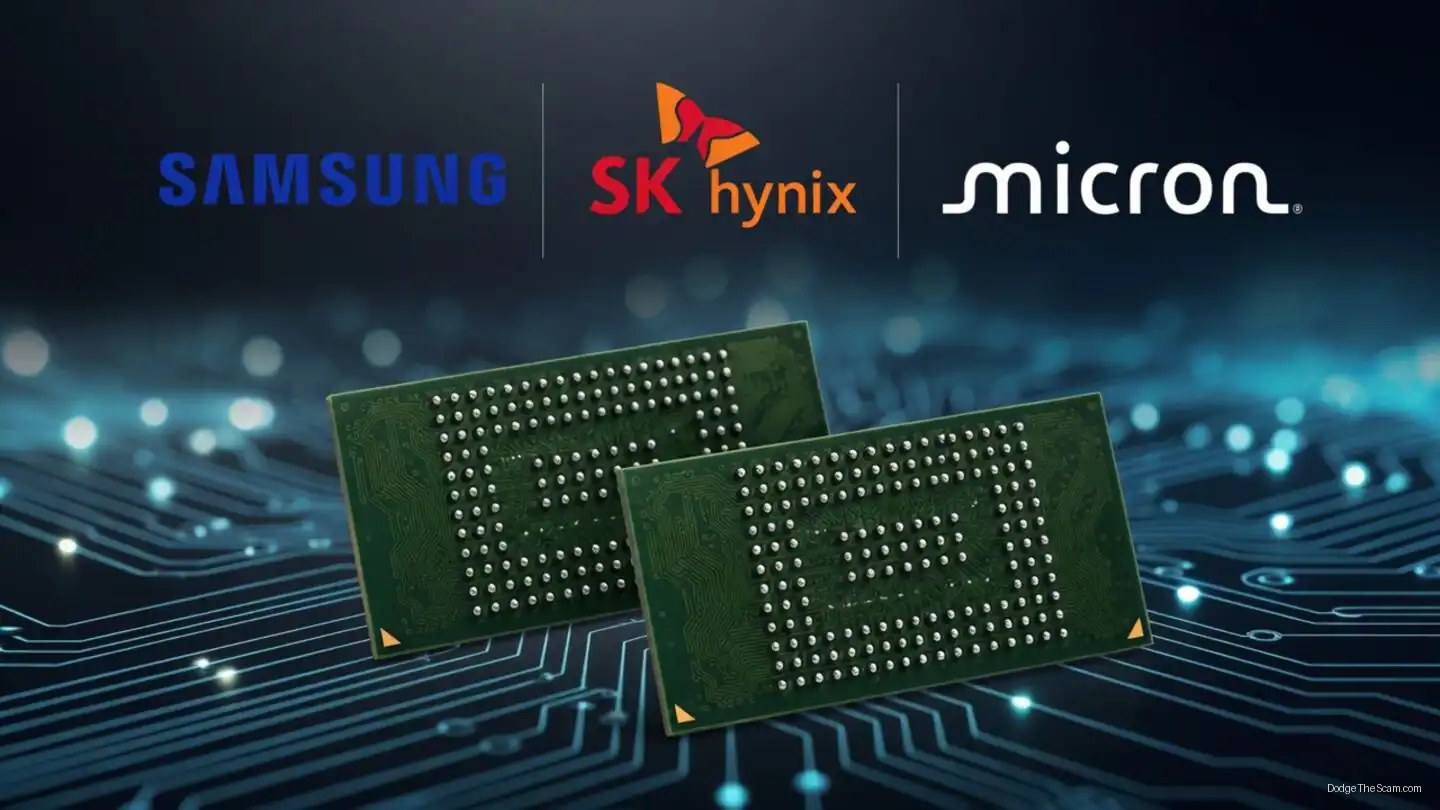
Seventeen plaintiffs have filed a proposed class-action lawsuit in the US District Court for the Northern District of California, accusing Samsung, SK Hynix, and Micron of conspiring to restrict commodity DRAM supply and inflate prices. The timing is awkward for all three: South Korea just announced roughly $650 billion in AI and semiconductor investment over the next decade, with Samsung and SK Hynix expected to account for the bulk of it.
The core allegation is that the three companies deliberately wound down production of DDR3 and DDR4 memory while redirecting production capacity toward high-bandwidth memory, the premium chips powering AI accelerators. Plaintiffs argue this created an artificial shortage that pushed commodity DRAM prices sharply higher over four years. The lawsuit also leans on history: both Samsung and SK Hynix pleaded guilty to US Department of Justice price-fixing charges in the mid-2000s, paying hundreds of millions in fines. Those convictions are cited as pattern evidence, which is a meaningful legal framing even if the current case remains entirely unproven.
The market’s response was blunt in its clarity: stocks dipped, then recovered within the same session, with Micron closing up 1.14%, Samsung up 4.02%, and SK Hynix gaining 1.79%.
That recovery reflects where institutional attention actually sits right now. SK Hynix’s HBM dominance and Micron’s positioning as the primary US-based memory supplier have made all three companies central to AI infrastructure buildout in a way that makes a civil lawsuit feel, to most investors, like noise against a much louder signal. AI labs are locking in memory supply years in advance, and the geopolitical logic of keeping advanced memory production close to allied governments adds another layer of insulation from legal risk. A class-action complaint, however well-constructed, competes with a decade-long demand curve.
What the lawsuit does do is put a formal legal record behind the supply-management behavior that analysts have tracked informally for years. If the case achieves class-action status and proceeds to discovery, internal communications about HBM prioritization decisions could become public, which is a different kind of risk than the financial exposure from damages. South Korea’s leveraged exposure to SK Hynix through structured products means any sustained legal pressure that rattles the stock would reverberate well beyond the company’s direct shareholders.




0 Comments