Ripple Spent $150M Fighting SEC Rather Than Shut Down

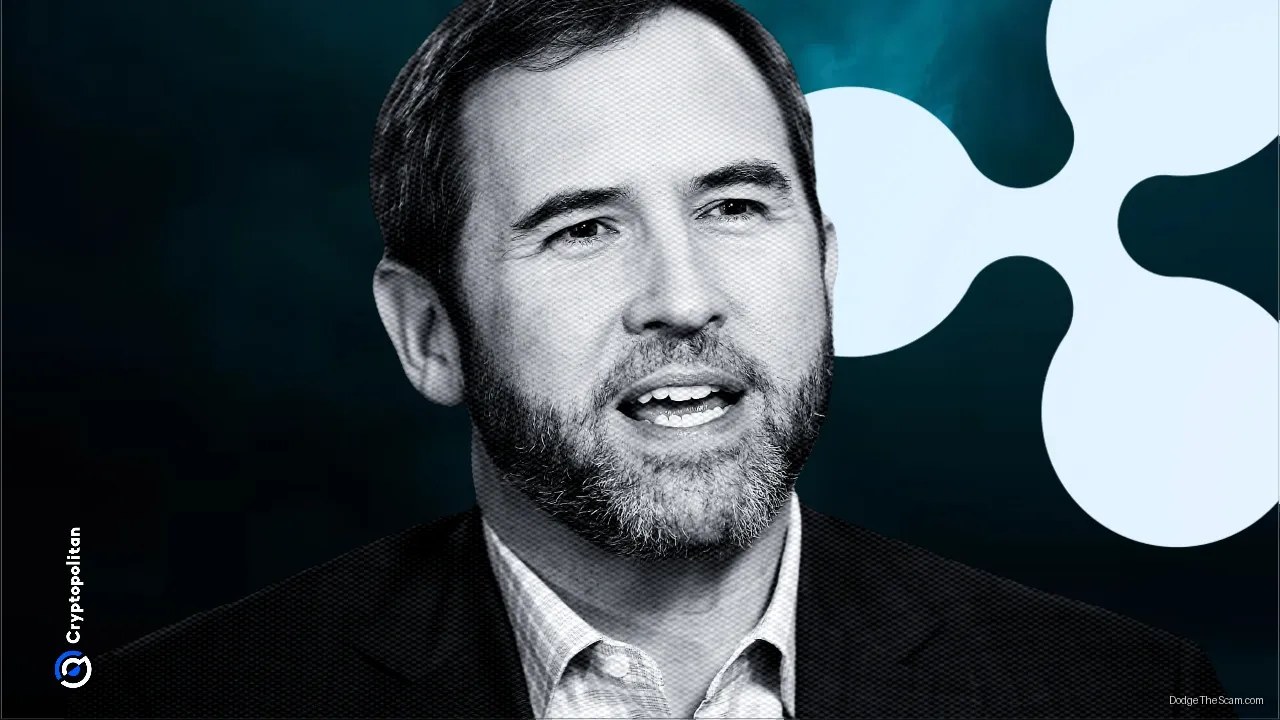
What You Need to Know
- Ripple spent $150 million on legal fees over four years fighting SEC lawsuit filed December 2020.
- Company considered shutting down and distributing XRP to shareholders but chose to continue protecting employee jobs.
- SEC argued XRP was unregistered security; Ripple countered that XRP holders received no equity rights unlike actual shares.
- Ripple’s network runs on open-source code it cannot unilaterally control, structurally similar to Bitcoin rather than corporate equity.
Ripple spent $150 million and four years in court when, by Brad Garlinghouse’s own account, it could have walked away. That choice, and what it cost, is the actual story here.
In a recent interview, Garlinghouse disclosed that Ripple seriously considered shutting down after the SEC filed suit in December 2020. The exit path was straightforward: distribute Ripple’s XRP holdings to shareholders, disclaim any token position, and let the case collapse for lack of a defendant worth pursuing. The company chose not to, Garlinghouse said, because the shutdown would have eliminated hundreds of jobs. Instead, Ripple spent approximately $150 million on legal fees and watched its U.S. business stall for roughly five years. The SEC also sued Garlinghouse personally over XRP he had sold. Regulators offered to settle his individual case with a fine while pressing forward against the company. He refused that too.
What the SEC Was Actually Arguing, and Why It Didn’t Hold
The SEC’s core position was that XRP constituted an unregistered security. Garlinghouse pushed back on the legal logic directly: securities typically confer rights in the issuing entity, things like shares, votes, board seats, or dividends. XRP buyers received none of those. Ripple raised actual equity in venture rounds in 2012, 2015, and 2016, the kind of instrument that genuinely resembles an Apple share. XRP was something else. The network runs on open-source code that Ripple cannot unilaterally control, a structural point that places XRP closer to Bitcoin than to corporate equity, at least in Garlinghouse’s framing.
What makes the SEC’s conduct harder to defend is the timeline Garlinghouse described. He visited the agency in 2017, 2018, and 2019 without legal counsel, explaining the XRP Ledger to staff. Not once, he said, did anyone suggest XRP might be a security. The lawsuit arrived in 2020 with no prior warning and no regulatory guidance issued in the intervening years. Ripple had been asking for clarity; the SEC’s answer was litigation.
The Regulatory Whiplash That Defined Five Years of Crypto Policy
This pattern was not unique to Ripple. The Gensler-era SEC pursued enforcement as a substitute for rulemaking across the industry, a strategy that generated headlines and legal fees but produced almost no durable regulatory clarity. The approach accelerated after the 2022 FTX collapse gave the agency political cover, but Ripple’s case predates that moment and illustrates the posture was already set. Crypto firms were left choosing between operating under legal ambiguity, self-censoring, or relocating offshore. Several chose the last option, which is precisely the outcome Garlinghouse argued regulators should have wanted to avoid.
Ripple ultimately prevailed on the central question of whether secondary market XRP sales constituted securities transactions, though the litigation stretched long enough that the former SEC chair was preparing an appeal before a change in administration altered the trajectory. Garlinghouse noted that the new chair took a materially different approach, engaging crypto companies rather than suing them.
The personal dimension of the case deserves a sentence on its own: the SEC’s decision to charge Garlinghouse individually, then offer to drop those charges in exchange for a fine while continuing against the company, reads as a pressure tactic rather than a principled legal position. He called it “distasteful” and “maybe unethical.” That characterization is hard to argue with given the sequence of events.
What Ripple’s Survival Signals for the Next Round of Regulatory Fights
The practical implication for other crypto firms watching this play out is that contesting the SEC is survivable, expensive, and slow, but potentially preferable to the alternatives. Ripple’s U.S. business was effectively frozen for five years, a cost that smaller companies could not have absorbed. The $150 million legal bill is a number only a well-capitalized firm with institutional backing and ongoing token revenues could sustain. Most projects facing similar pressure will not have that runway.
On the product side, Garlinghouse’s comparison of XRP to Bitcoin on transaction economics, roughly four seconds and a fraction of a cent versus ten minutes and around ten dollars per transaction, is a pitch to financial institutions, not retail holders. Ripple sells software to banks. That positioning matters because the regulatory fight was always partly about whether a payments-focused token serving institutional clients deserved different treatment than speculative assets. The court, eventually, agreed it did.





0 Comments