India Demands U.S. Halt Hormuz Attacks as Oil Disruption Threatens Crypto Markets
What You Need to Know
- Three tankers with Indian crew struck in Strait of Hormuz this week, killing three sailors during U.S. campaign.
- India formally demanded Washington halt attacks on commercial vessels, creating friction ahead of Modi-Trump G7 meeting June 15-17.
- Strait of Hormuz carries roughly 20% of globally traded oil; disruptions affect crypto markets through energy price impacts.
- U.S. forces disabled eight vessels and turned back over 100 others since campaign began April 13.
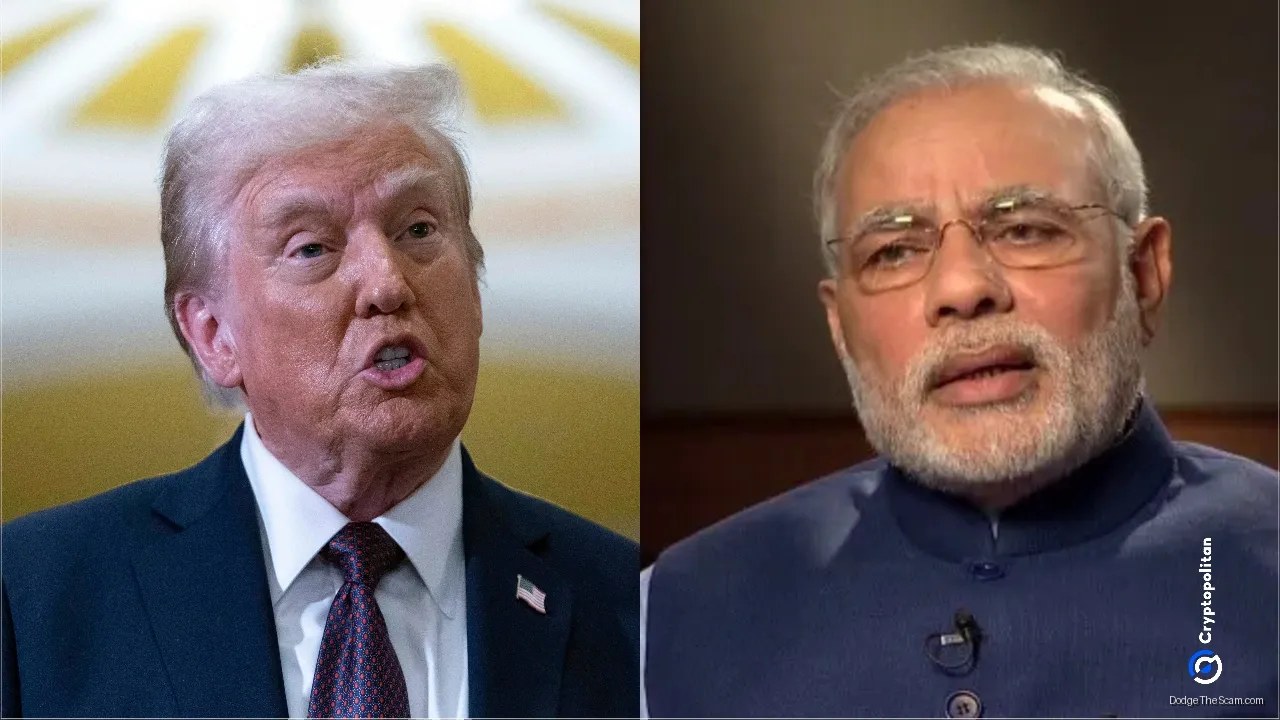
The Strait of Hormuz has become the most disruptive variable in global oil markets right now, and three tankers carrying Indian crew were struck this week during the ongoing U.S. campaign against Iran-linked shipping, killing three sailors. India responded by formally demanding Washington halt attacks on commercial vessels, injecting a new friction point into what was already a complicated bilateral relationship ahead of the G7 summit in France.
The Modi-Trump meeting in Evian-les-Bains runs June 15 to 17, and according to Reuters, neither side expects a trade deal to be signed there. The summit functions as a temperature check before U.S. Trade Representative Jamieson Greer travels to India the following week to continue negotiations on tariffs and market access. A 12.5% tariff threat still hangs over those talks, and India’s commerce minister Piyush Goyal has said a preliminary deal could be completed by mid-July, which is a tight window given the shipping dispute now running parallel to the trade file. Secretary of State Rubio spoke with Indian Foreign Minister Jaishankar on Friday about the Hormuz situation, and the State Department confirmed that call a day later, suggesting the two governments are managing the tension carefully rather than letting it collapse the broader relationship.
The Strait of Hormuz carries roughly 20% of globally traded oil, and sustained disruption there tends to reach crypto markets faster than most macro variables, through energy prices feeding into broader risk-off positioning.
U.S. forces have disabled eight vessels and turned back more than 100 others since the campaign began April 13. That scale of interdiction is already affecting tanker routing and insurance costs for Asian importers, India among them, which helps explain why New Delhi elevated the issue formally rather than absorbing it quietly. For crypto markets, the relevant signal is whether a U.S.-Iran agreement materializes quickly or drags: Pakistan’s prime minister and Iran’s foreign minister both said this week that a deal was closer than ever, and Trump amplified that framing, but the same pattern of near-deal rhetoric appeared several times in prior weeks without resolution. Bitcoin’s correlation to macro risk assets has been tight since 2020, and a genuine Hormuz de-escalation would likely matter more to near-term price behavior than any single ETF flow day.
Pakistan said an electronic signing could happen within 24 hours, and technical talks were being scheduled for next week. If that timeline holds, the shipping disruption that India raised formally at the G7 becomes a short-lived crisis rather than a structural one, and the trade negotiation track with Greer’s India visit can proceed without a geopolitical overhang complicating it.



0 Comments