Coinbase CEO Pushes Chinese AI Model to Cut Token Costs
What You Need to Know
- Coinbase CEO proposes using cheaper open-weight AI models, including Chinese systems, to control spiraling token costs.
- Uber exhausted its entire 2026 AI budget by April; only 26% of companies track AI spending visibility.
- GLM 5.2 costs $1.40 per million tokens versus Anthropic Opus at $5.00 with competitive benchmark performance.
- Chinese AI model cloud APIs fall under China’s National Intelligence Law, raising U.S. cybersecurity concerns for critical infrastructure.
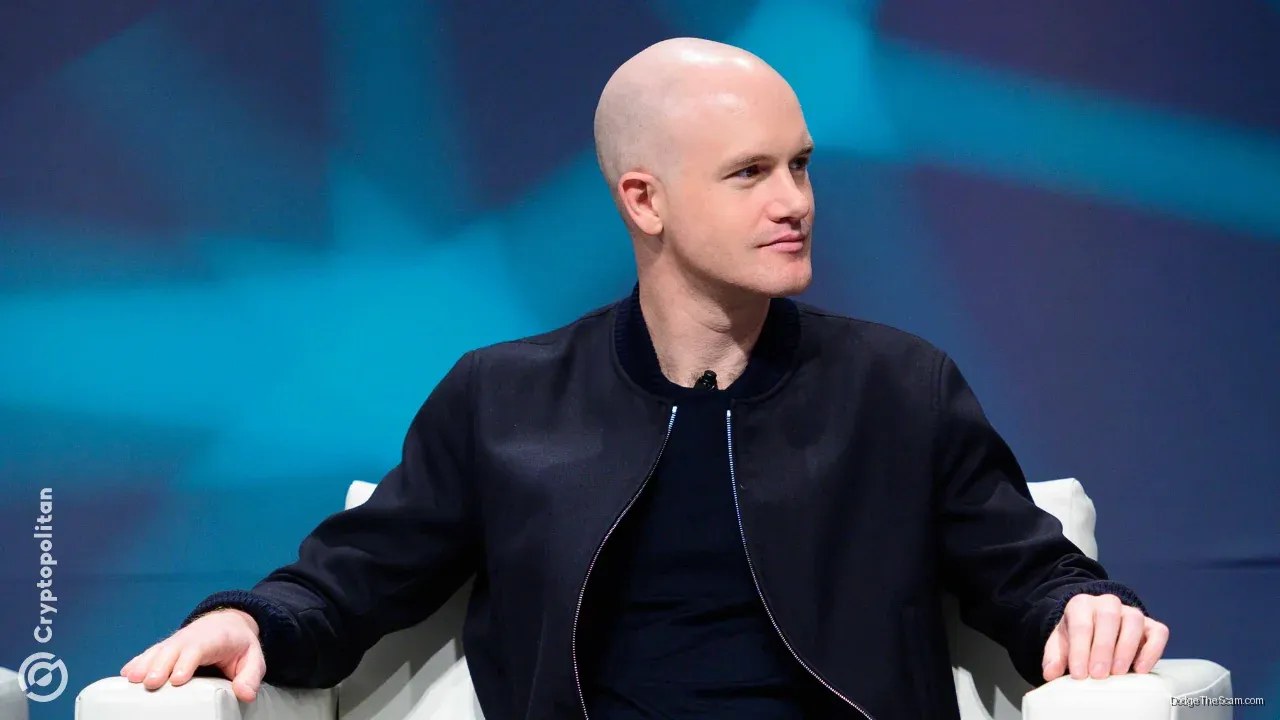
Coinbase’s CEO Brian Armstrong has proposed routing enterprise AI workloads through cheaper open-weight models, including Chinese systems like Zhipu’s GLM 5.2, as a way to control token costs that are visibly spiraling across the industry.
The cost pressure Armstrong is responding to is real and spreading fast. Uber exhausted its entire 2026 AI coding budget by April. Meta issued internal memos about exponential consumption growth. A KPMG survey found only 26% of companies have full visibility into their AI costs, with 22% discovering overruns only after receiving the bill. Goldman Sachs projects token consumption could reach 120 quadrillion per month by 2030, a 24-fold increase from current levels. Against that backdrop, GLM 5.2’s pricing is genuinely striking: $1.40 per million input tokens versus Anthropic’s Opus 4.8 at $5.00, with benchmark scores that one researcher called competitive with closed-source systems at a fraction of the price.
Self-hosting the open weights eliminates the API data-routing problem, but it does not resolve questions about the model itself.
GLM 5.2’s cloud API falls under China’s National Intelligence Law, and U.S. lawmakers opened a formal inquiry in May into cybersecurity risks from Chinese-origin AI in critical infrastructure. Anthropic disclosed to the Senate Banking Committee that Alibaba Qwen operators ran 28.8 million Claude exchanges through roughly 25,000 fake accounts between April and June, which Anthropic called the largest known campaign to steal a model’s capabilities. The GLM 5.2 benchmark numbers are also contested: one AI builder who tested it directly against GPT-5.5 on debugging tasks called the comparison “not even close,” despite the headline scoring on SWE-bench Pro where GLM 5.2 scored 62.1 against GPT-5.5’s 58.6. One data point on a coding benchmark is not a procurement decision.
What This Signals Beyond Coinbase
Armstrong’s proposal is less interesting as a Coinbase-specific story than as a signal of where enterprise AI procurement is heading. The International Data Corporation predicts 70% of leading AI-driven enterprises will use multiple models by 2028, and cost pressure is the obvious driver. But the Pentagon’s expanding restrictions on Chinese technology vendors mean that any company in regulated industries or with government contracts faces a harder version of this tradeoff than Armstrong’s framing acknowledges. For a crypto exchange that already operates under significant regulatory scrutiny, the reputational and compliance geometry of routing workloads through Chinese-origin systems is not straightforward, even with local deployment.
The MIT license on GLM 5.2 does make self-hosting technically clean. Whether legal, compliance, and board-level risk tolerance at most enterprises follows the same logic is a different question entirely.




0 Comments