CLARITY Act Passage Odds Drop to 50% as Senate Calendar Tightens

What You Need to Know
- Galaxy Research lowered CLARITY Act passage probability from 60% to 50% due to Senate scheduling constraints.
- Senate Majority Leader must announce floor time by early July to avoid pre-midterm political costs in September.
- CLARITY Act requires 60 Senate votes plus reconciliation between Senate and House versions before August recess.
- Community Bankers launched six-figure ad campaign opposing stablecoin reward provisions, citing potential $1.3 trillion deposit outflow.
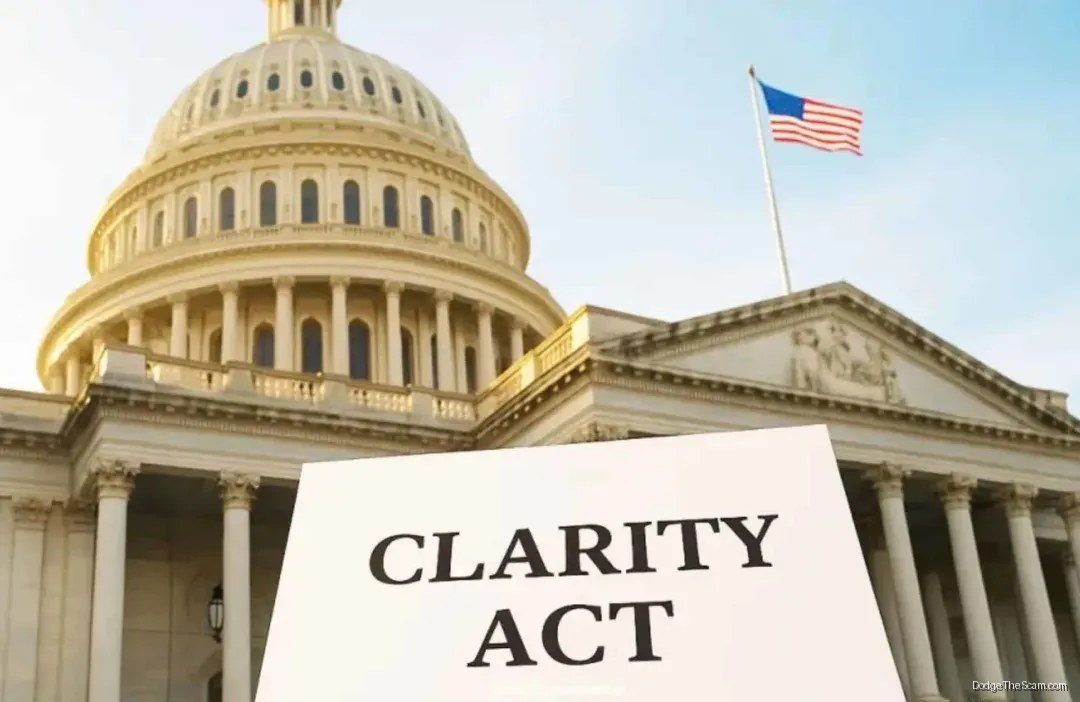
Galaxy Research has cut its probability estimate for the CLARITY Act becoming law in 2026 from 60% to 50%, citing a Senate calendar that is running out of room rather than any collapse in political support. The bill still has bipartisan backing, but backing and floor time are different things.
The mechanics here matter. According to Galaxy’s Alex Thorn, Senate Majority Leader Thune needs to announce floor time by early July for a vote to land before the August recess, otherwise the bill slides into September, directly into the pre-midterm window where controversial votes become politically costly. The bill still needs 60 Senate votes, then reconciliation between the Senate Agriculture Committee version and the House-passed text. Prediction markets are pricing this squeeze: Polymarket traders currently put passage at roughly 44%. The CLARITY Act already faces institutional skepticism from quarters that give its critics far more credibility than the usual industry opposition, and a compressed timeline only amplifies that pressure.
Scheduling risk is underrated in crypto legislative coverage. Bills that lose their window rarely get a clean second attempt in the same Congress.
The Deposit Drain Argument
The Independent Community Bankers of America, representing nearly 4,000 banks, has launched a six-figure ad campaign targeting specific provisions around stablecoin incentives. Their argument is concrete: allowing stablecoin issuers to offer rewards could pull deposits toward crypto platforms, with the ICBA estimating as much as $1.3 trillion leaving community banks and reducing small-business lending capacity by roughly $850 billion. Community banks currently handle more than 60% of small-business loans and around 80% of agricultural lending in the US, which means this is not a Wall Street concern but a Main Street one, and it plays differently in Senate offices representing rural states. The CLARITY Act debate has now expanded well beyond the SEC-versus-CFTC jurisdictional question that originally defined it, and that expansion complicates the vote count in ways that are harder to negotiate around than technical drafting disputes. The pattern of assets and systems left inadequately monitored during transitional periods applies to regulatory frameworks too: the longer this bill sits unresolved, the more opposition has time to organize around its edges.
For the digital asset industry, the CLARITY Act was supposed to deliver the thing it has wanted for years: defined jurisdictional boundaries between the SEC and CFTC, plus registration standards that replace enforcement-by-lawsuit. A slip to September does not kill the bill, but it hands opponents more time and forces crypto advocates to compete for attention against a midterm political environment where association with controversy is something incumbents actively avoid.
If Thune does not signal floor time during the July 4 recess, the practical window for 2026 passage narrows sharply, and the industry will likely spend the back half of the year managing expectations rather than a signing ceremony.





0 Comments