BIS Concludes Stablecoins Aren’t Money, Reclassifies Them as ETFs

What You Need to Know
- BIS concluded stablecoins fail all four criteria defining money: singleness, elasticity, interoperability, and integrity.
- Stablecoin supply is mechanically passive, expanding only after receiving cash, unlike bank money that responds to credit demand.
- Over 99% of the $320 billion stablecoin market is dollar-denominated, accelerating financial dollarization in emerging economies.
- BIS models project stablecoins growing to $1-3 trillion would have modestly negative effects on economic output.
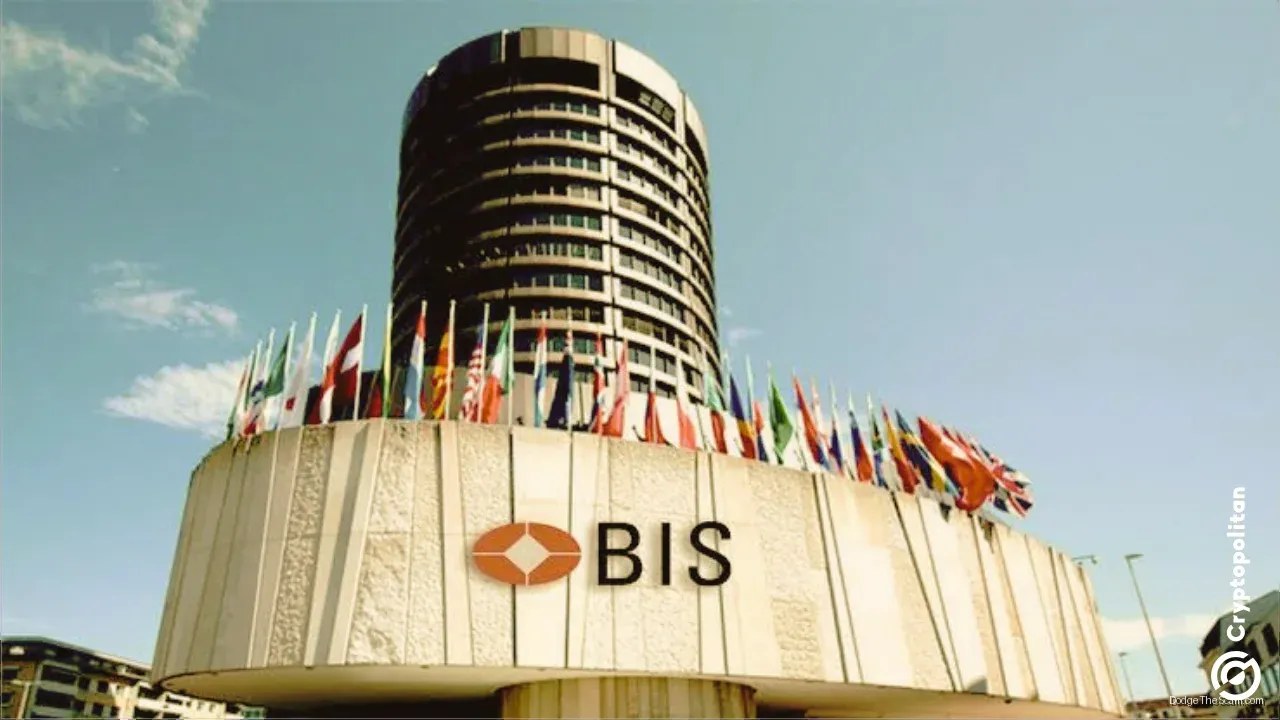
The Bank for International Settlements has formally concluded that stablecoins fail every criterion it uses to define money, and that their near-total dollar denomination is accelerating a form of financial dollarization that central banks in emerging economies are poorly equipped to stop.
The BIS evaluated stablecoins against four properties it considers essential to money: singleness, elasticity, interoperability, and integrity. Stablecoins failed all four. The most structurally interesting failure is elasticity. Traditional bank money expands and contracts with credit demand because banks lend against deposits. Stablecoin issuers do the opposite: they mint only after receiving cash, which means supply is mechanically passive rather than responsive. The BIS drew the comparison explicitly, describing stablecoins as behaving more like ETF shares than deposits. That framing matters because it reframes the regulatory question: if stablecoins are investment products rather than money, the entire basis for treating them as payment infrastructure weakens considerably. The dollar-dominance concern is not new, the Council on Foreign Relations flagged it in 2025, but the BIS is now the one saying it loudly, in an annual report, with a macroeconomic model attached.
Over 99% of the roughly $320 billion stablecoin market as of late May 2026 is dollar-denominated, with Tether’s USDT and Circle’s USDC accounting for most of that figure.
The economic concern the BIS raises goes beyond sovereignty. Its model projects that even if the stablecoin market grew to between $1 trillion and $3 trillion, the net effect on economic output would remain “modestly negative.” The mechanism is straightforward: as deposits migrate from commercial banks to stablecoin issuers who park reserves in US Treasuries and money market instruments, banks lose cheap funding, raise deposit rates to compete, and lending costs climb. Countries like Turkey, Argentina, and Nigeria are already deep into stablecoin adoption as citizens seek dollar exposure outside formal banking, and the BIS is skeptical that the capital controls several emerging economies have imposed will hold against self-custodial tokens the way they might against traditional cross-border transfers.
The BIS is not recommending a ban. Its preferred path is a “unified ledger” architecture combining tokenized central bank reserves with commercial bank money on shared infrastructure, citing Project Agora, a cross-border payments prototype, as proof of concept. That proposal will take years to materialize at scale, and in the meantime the stablecoin market continues to grow. The gap between where the BIS wants payments infrastructure to go and where capital is actually moving is widening, not closing.





0 Comments