SK Hynix Nasdaq Debut Raises $26.5B as AI Chip Demand Outpaces Supply
What You Need to Know
- SK Hynix raised $26.5 billion in Nasdaq IPO, closing first day up 13% at $168.01.
- Company leads global high-bandwidth memory market, essential chip category for AI infrastructure.
- SK Hynix plans $4 billion advanced packaging plant in Indiana, needs capacity expansion.
- HBM inverts semiconductor economics from commodity business to high-margin specialized technology.
SK Hynix landed on the Nasdaq Friday with a 13% first-day gain, closing at $168.01 after opening at $170. The South Korean chipmaker priced its U.S. depositary shares at $149 each and raised $26.5 billion, short of the roughly $29 billion target outlined in its earlier filing but still one of the larger semiconductor listings in recent memory. American investors now have a direct, exchange-traded route into the company that currently leads the world in high-bandwidth memory, the chip category that AI infrastructure runs on.
The timing is deliberate. SK Hynix shares on the Korean exchange have risen more than sevenfold over the past year, pushing the company’s valuation toward $1 trillion. Only Samsung Electronics sits above it on the Korean market. The Nasdaq listing converts that domestic momentum into a U.S. capital raise at a moment when the company needs the money: a $4 billion advanced packaging plant in West Lafayette, Indiana, is scheduled to finish in 2028, and customers are already telling management the planned capacity doubling over five years is not enough. Chairman Chey Tae-won quoted them directly on CNBC Friday: “That’s not enough, man, and we need more.”
Why HBM Changes the Stakes for This Listing
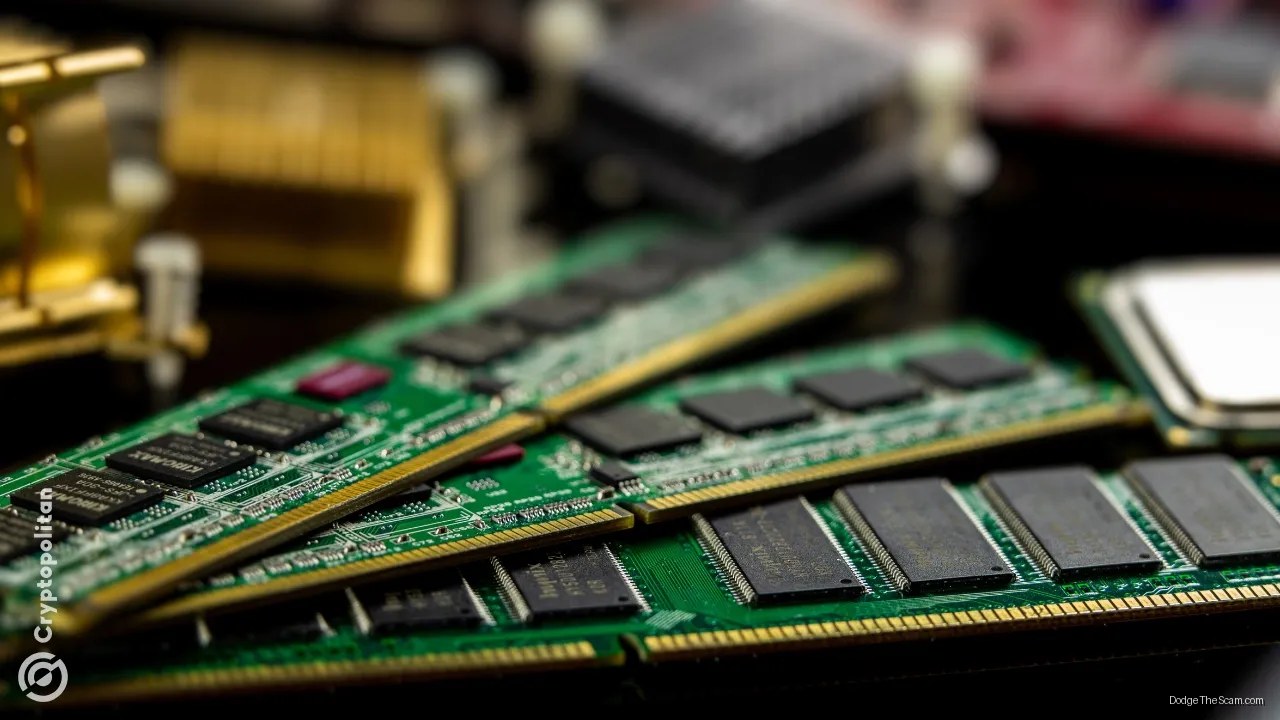
Memory was, for most of semiconductor history, a commodity business: cyclical, margin-thin, and dominated by whoever could manufacture the most gigabytes per dollar. High-bandwidth memory inverts that logic. HBM stacks multiple memory layers together so processors can access large volumes of data at speeds conventional RAM cannot match, which makes it the rate-limiting input for AI training and inference at scale. SK Hynix built this architecture before its main rivals and analysts expect it to capture more than half of global HBM sales this year.
Nvidia is the largest single customer for HBM globally, and Jensen Huang visited SK Hynix in Seoul in June, with the two companies announcing a multi-year partnership. That relationship gives the listing a floor that a generic memory IPO would not have. Meanwhile, Micron broke ground on a $9.3 billion memory plant in Hiroshima targeting AI accelerators, but volume from that facility remains years out, leaving SK Hynix’s lead intact for the near term.
Federal Money and the Indiana Bet
The Indiana facility is not purely a commercial decision. SK Hynix is eligible for up to $458 million in grants under the CHIPS and Science Act, plus up to $570 million in loans from the U.S. Commerce Department. That federal subsidy structure, created in 2022 to onshore semiconductor production, makes the Indiana plant cheaper to build than its sticker price suggests and ties the company’s U.S. expansion to a political priority that has survived multiple administrations.
The earlier ADR filing had suggested tight memory supply conditions persisting beyond 2027, which frames the capital raise less as opportunism and more as a race to lock in capacity before the window closes. SK Hynix’s parts already sit inside Apple and Dell products, meaning its supply chain is deeply embedded in U.S. consumer and enterprise hardware regardless of where the company was listed.
What the Listing Signals Beyond SK Hynix
The Nasdaq debut arrives while a proposed class-action lawsuit in the Northern District of California names Samsung and SK Hynix among defendants accused of memory price-fixing, a case that will now involve a company with a much more visible U.S. legal and regulatory footprint. A listing does not create liability, but it does create disclosure obligations and a shareholder base with standing to pay attention.
SK Hynix is also expanding HBM capacity domestically in South Korea, with new facilities planned in the Cheonan-Onyang corridor alongside a humanoid robot production line in Gumi. The U.S. listing, the Indiana plant, and the Korean buildout together describe a company treating current AI demand not as a cycle peak but as a structural floor. Whether customers’ appetite for HBM holds at that level is the only question that actually matters for whether the $26.5 billion raised Friday was priced correctly.



0 Comments